

Teleworkers: the new target for IT brands
Lockdown—a term everyone would like to ban from their vocabulary, given how much it has been talked about and how it put our freedoms on hold. While some experienced it as a burden, others saw the benefits of this historic interlude. The health crisis forced companies to develop remote work, which in turn boosted digital transformation. 💥
Remote work is now more than ever at the heart of employee and business concerns. 86% of remote workers want to continue working remotely. This is a revelation for employees and managers alike, tending to upend the "commute, work, sleep" routine.
👁🗨 What is the future of remote work?
Currently, remote work is the norm in companies with more than 50 employees (61.8%). 63% of senior executives have a positive view of remote work, while 86% of remote workers would like to continue working from home.
While there are already an average of 44.6% of remote workers in Europe, the trend is set to grow. In fact, a study reveals that by 2030, the demand for remote work will increase by 30% with the arrival of Generation Z in the workforce. 📈
🤝 Remote work and IT equipment: a growing connection.
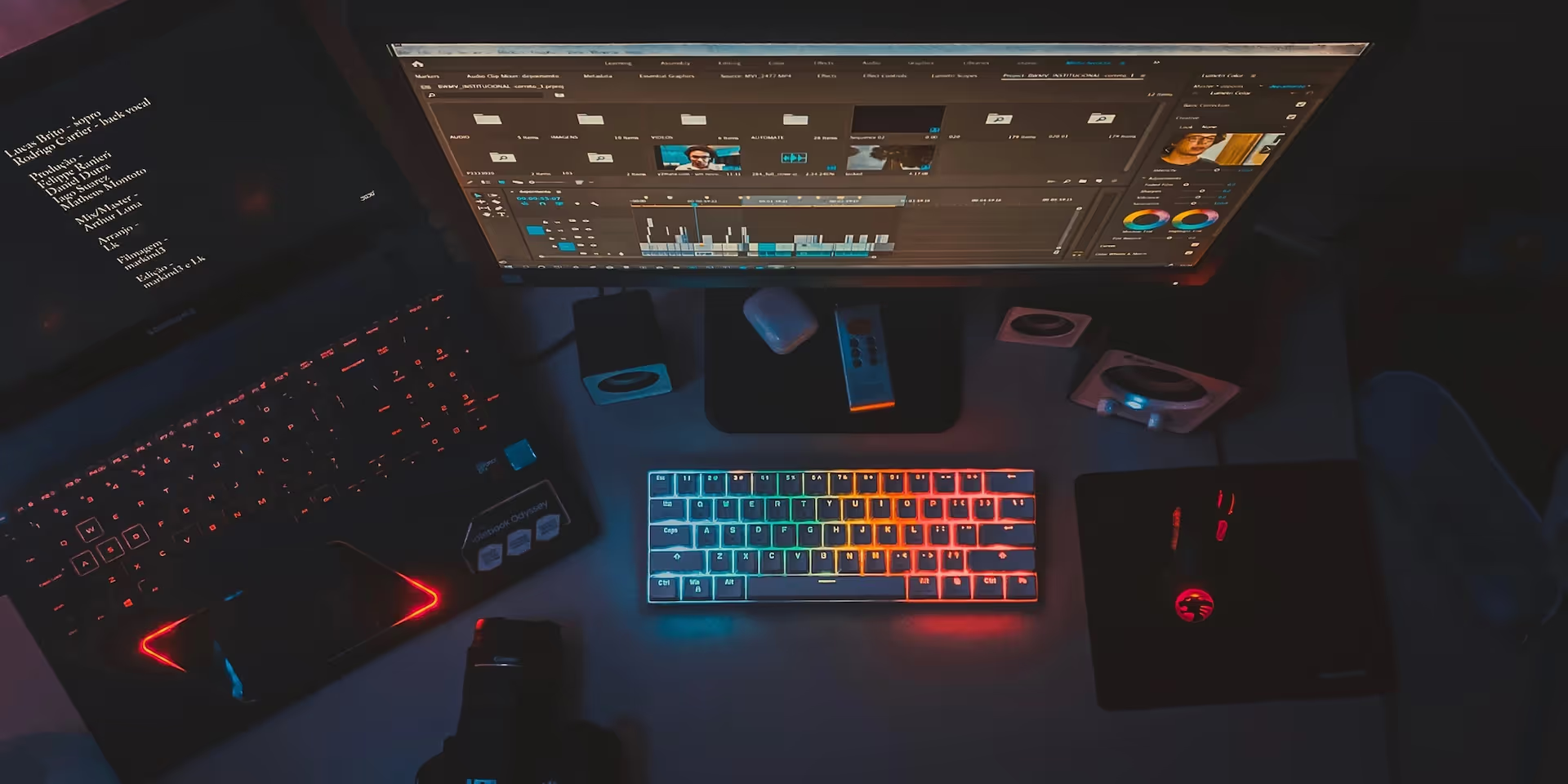
With a considerable amount of time spent in front of a screen, new needs are emerging. Initially, IT product and service brands targeted a clientele of seasoned gamers. Given the hours dedicated to gaming, they equip themselves for the sake of comfort, quality, and performance.
The link is quickly established between the needs of gamers and those of remote workers. Different goals, but a common interest: productivity and well-being. 😇
Let's get straight to the point. Remote work seems to be a promising sector for IT brands 💻. As proof, 1 in 2 people who have worked remotely in France has already purchased a product for professional use, and more than a third are planning a purchase soon. Added to these statistics are the top-selling products: computers, tablets, and printers. These figures date back to the lockdown, but they confirm the needs for accessories and supplies related to remote work.
💣 Flashback: the sales boom during the lockdown.
Let's recall that in the first quarter of 2020, a major boom occurred in the IT and office equipment sector. Fnac saw its multimedia sales multiply by 4, and CDiscount doubled its sales of IT products.
More generally, employees rushed to buy all types of supplies: office consumables, but especially hardware, including PCs, followed by office chairs and headsets (according to the GfK Work from Home study). ⏳ If the remote work trend is becoming a new habit, IT brands must see this as an opportunity to expand their target audience.
Let's create your strategy together 👇
🧐 What is the profile of remote workers?
In addition to being a trendy sector, remote work allows for precise target analysis.
So, who are we talking to? 🎯
Executives make up the majority of employees who work remotely, accounting for 60.6%.
Following them, 21.4% belong to intermediate professions.
The gender split is balanced, with women and men making up 47% and 53% of remote workers, respectively.
People over 40 represent 62.8% of those who work remotely, while those aged 15-39 account for 37.2%.
80% of remote work takes place in the service sector.
👉 In short: a core urban target, high-income professionals over 40, working in service companies with more than 50 employees.
That’s all well and good, but how do you actually reach this target?
The best way: contact us 👇
🚩 Which levers can be used to reach them?
Since you’re still here, we’ll reveal a few ways to reach the heart of your new target audience.
A cross-media strategy:
📱 Social Media
Let’s face it: LinkedIn is the go-to network for professionals and businesses. Three-quarters of its users are between 25 and 54, with a majority of executives and business leaders. It is also the most effective network for driving purchases: 45.6% of B2B decision-makers discovered the content that led to a purchase on LinkedIn.
🔦 DOOH: Digital Out Of Home
DOOH advertising offers highly effective geographic and sociodemographic targeting to reach your audience where they spend their time. To reach high-income professionals, ads can be displayed near cultural venues like museums, concert halls, and cinemas, or near coworking spaces. In short, no matter the location, digital billboards are a strategic tool for branding and awareness.
At Klox, we develop strategies—from targeting to selecting the right channels—to reach your audience and meet your goals. 💡
💻 Display Advertising
As you’ve gathered, remote workers spend a lot of time on screens, often checking B2B news outlets. These include publications like Stratégies, Challenges, BFM Business, and many others. We can help you run banner ads on our media partners' websites to reach your audience. Display advertising allows for targeting based on users' specific interests.
Furthermore, podcasts are popular with remote workers. Given the profile of their listeners, B2B podcast formats are particularly relevant. Among the many options available, notable examples include Génération Do It Yourself, La Loupe, and Ted.
📺 TV & IPTV
When we talk about media, we’re talking about TV and IPTV. The concept? Reach your audience while they’re watching catch-up TV, on channels like BFM Business, for example. Using non-skippable video formats, this lever allows for personalized targeting based on the programs watched, user data, geography, and more.
ℹ WeTransfer
Finally, remote work encourages companies and their employees to develop internal communication channels to exchange information, documents, and files. Among these channels is the well-known WeTransfer, which makes file sharing easy. If employees are communicating via this application, you have the opportunity to reach them there, too—by displaying advertising content.
🔔 Bottom line
Driven by digital growth and the rise of remote work, new opportunities are emerging for brands specializing in IT and office equipment. Just as gamers have invested in gear focused on comfort and performance, it is highly likely that employees will adopt this same mindset for working from home. A market is opening up, and the time has come to map out a new future.
Today, remote work primarily concerns a B2B audience, but its widespread adoption suggests that the coming years will be rich in terms of workplace evolution and organization. The market is expected to grow, allowing brands to target not only companies and their employees but also B2C audiences. This blossoming market is set to see new segments emerge, particularly Gen Z.

Stay up to date and subscribe to our newsletter