


Retail media data: the personalized advertising revolution
Public attention: the most valuable asset to capture
Bombarded with online ads, consumers are growing tired of them and are increasingly using ad blockers. On television, repetitive commercials are also wearing viewers out. 😩
The result: public attention is becoming a rare commodity to capture.
So, how do you stand out from the crowd?
The solution: data! 📊
By targeting precisely consumers and optimizing the number of exposures, brands reduce advertising waste and boost their ROI.
And that’s not all... Data allows for personalized messaging, by prioritizing more effective and less intrusive digital channels, such as SMS.
Using data is about much more than just collecting internal customer information. It also means tapping into external sources to go even further.
Retail media data: a booming solution 🔥
What is retail media data?
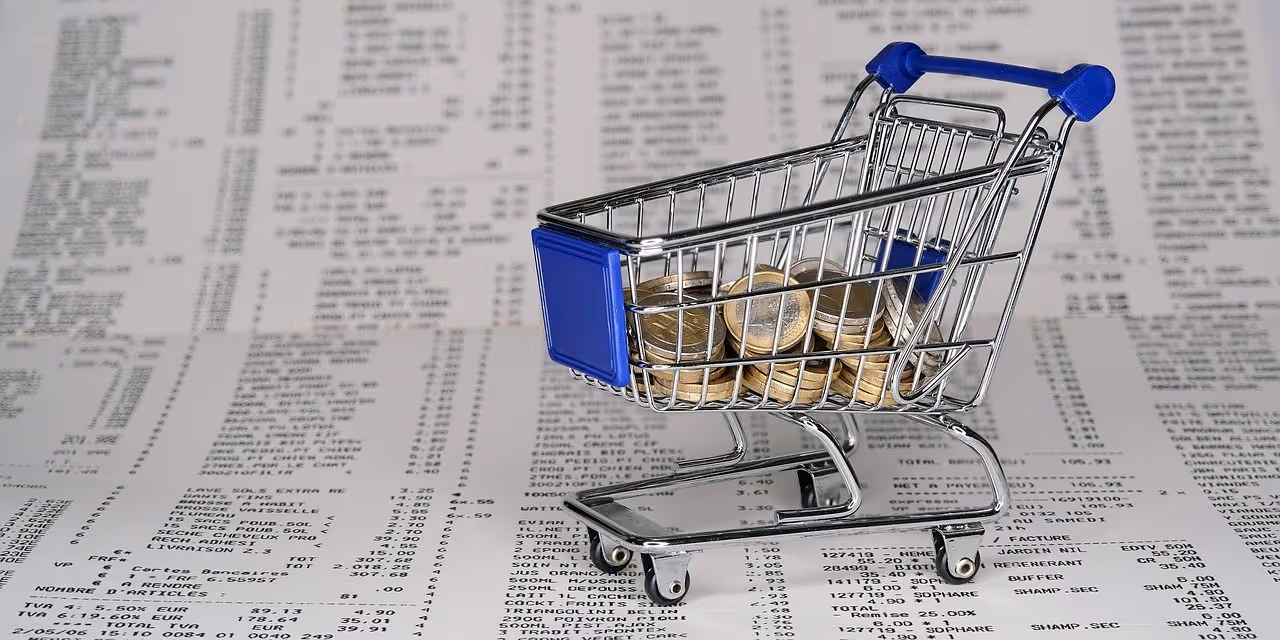
It is the ability to use and retrieve purchase data from customers collected by retailers (whether online or in-store) to personalize and target advertisements. This data allows brands to better understand consumer behavior and optimize their shopping experience.
A concrete example:
If I sell ethical coffee, I could purchase data on consumers who have recently bought Fairtrade coffee. It is a precise targeting that boosts my conversion chances. ☕️
Today, retailers are becoming media companies by selling their data and offering advertising space on their platforms.
Amazon is clearly the leader in this field. But in France, players like Infinity (Intermarché, Casino, Monoprix, Franprix) and Unlimitail (Carrefour/Publicis) are joining forces to create retail media networks
🔎 In comparison to collecting data in-house, also known as first-party data, using data provided by retailers requires less technological and human investment for a company and can therefore prove to be a quickly relevant and profitable solution.
Key figures (according to the 2024 e-pub Observatory) 📈
In 2024, retail media accounts for 11% of the advertising market, with 14% growth.
The Retail Search sector dominates this segment with a 17% increase, representing 72% of the market.
Retail search marketing involves paying for products to appear at the top of search results on e-commerce sites, similar to seeing sponsored items on Amazon.
Conversely, Retail Display , which uses more traditional advertising formats like banners on these sites, is seeing more moderate growth of 5%.
It remains, however, an important pillar of advertising strategies.
An important aspect of retail media is offsite advertising. This means using retailer data to target consumers on external sites (such as social media or streaming platforms).
✅ This strategy allows you toexpand your audience,increase brand visibility andoptimize advertising costs.
Marketing more personalized than ever 🎯
Consumers are increasingly demanding. They want tailored offers, adapted to their specific needs. Retail media data allows us to:
- Target the right channels and messages
- Refine our offers so they are hyper-personalized
But be careful: Even though personalized advertising is a powerful tool, it is crucial to respect the legal boundaries imposed by regulations (such as the GDPR in Europe). 🔒
Brands must ensure that their practices are transparent, ethical and compliant with current laws to avoid penalties.
In a saturated world of advertising,hyper-personalization through data (and more specifically retail media data) is the strategy to adopt to stand out and reduce customer acquisition costs. 🔑
.avif)
Stay up to date and subscribe to our newsletter