

GEO vs SEO: understanding and integrating these strategies

SEO and Local SEO : these two acronyms will soon become inseparable for any brand looking to stay visible on search engines. Here is why. 🔍
SEO and Local SEO: why are these levers becoming essential in 2025?
Diversification of search engines
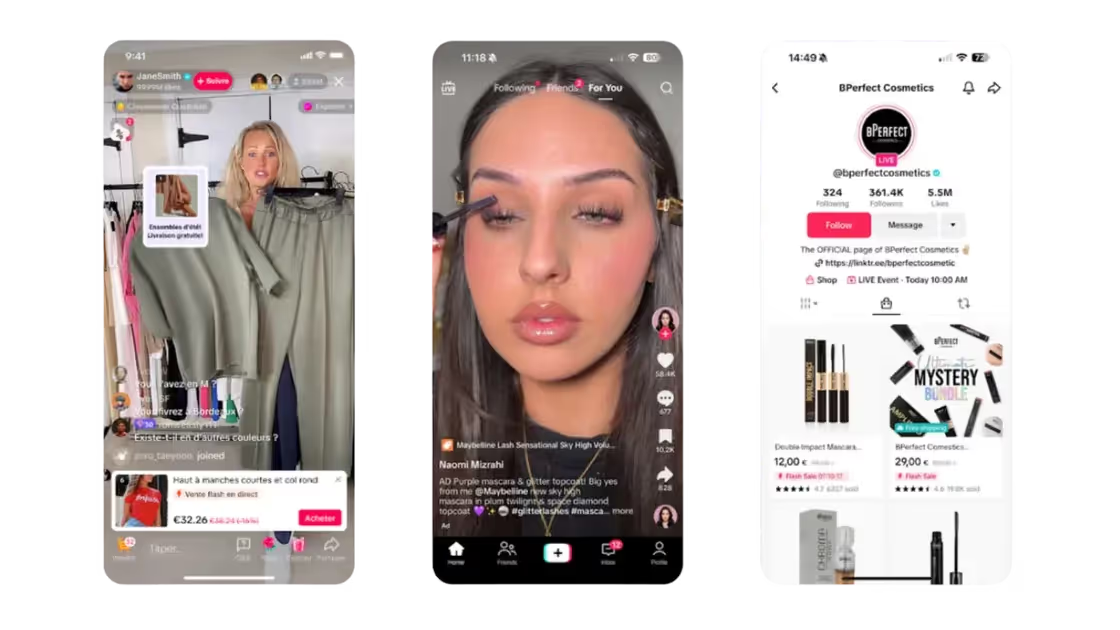
Searches are no longer performed solely on traditional search engines like Google. In recent years, other channels have been taking up more and more space in online searches. For example, TikTok and Instagram are used by 71% and 66% of Gen Z as search engines to discover products and/or check reviews before making a purchase.
> 🔎 As we mentioned in our latest article, for more info on social commerce in 2025 we recommend you take a look.
Consumers go through several stages and information sources to form an opinion: 60% of them consult at least 6 different touchpoints before buying a brand or product they are unfamiliar with.
👉 Brands must therefore increase touchpoints to stay top-of-mind for consumers.
The decline in Google's market share
For the first time since 2015, Google has seen its search market share 🔍 fall below 90%. On desktop, it now accounts for only 75% of queries. 📉
Google searches are generating fewer and fewer clicks. In 2020, ⅔ of Google searches resulted in zero clicks.
The rise of generative AI
Of all searches conducted across various platforms (such as Google, Bing, YouTube, TikTok, etc.), 4.33% were for ChatGPT in October 2024.
📈 The growth in market share in terms of "Share of Search" is becoming increasingly significant for ChatGPT, with + 13% market share per month. At this steady growth rate, OpenAI's generative AI would overtake Google in 4 years !
SEO and GEO: what are they?
Search Engine Optimization (SEO)
SEO, an acronym for Search Engine Optimization, also known as organic search or natural referencing refers to the techniques used to improve your site's ranking on search engines to generate traffic without paying for advertisements.
👉 The goal? To gain visibility, attract leads, and build awareness for your offering in a sustainable and cost-effective way.
Generative Engine Optimization (GEO)
Until a few months ago, Google was considered the only search engine, but that is no longer the case today, especially with the rise of generative AI.
This is where GEO (Generative Engine Optimization), an extension of SEO, comes in designed for new conversational search engines powered by artificial intelligence, such as ChatGPT, Gemini, or Copilot.
GEO therefore involves optimizing content so that it is clearly understood, interpreted, and recommended by AI – ensuring it is well-positioned and frequently cited in generated responses.
GEO vs. SEO: What are the differences between these two strategies?
GEO and SEO share the same goal, but there are some unique characteristics to generative and conversational platforms.
Searches are often longer and less precise, phrased as sentences rather than keywords. AI does not present a list of links, but generates a unique, personalized response based on its knowledge and available content.
⏩ Result: performance tracking is more complex, and two users may get different results for the same question.
GEO & SEO: How to integrate GEO into your SEO strategy?
1. Work by topic, not just by keyword
👉 Group your content by subject (clusters) to cover all angles of a theme, just as AIs do.
2. Optimize semantics around your brand
👉 Use a variety of phrasings and lexical fields so that AIs recognize and cite your brand in their responses.
3. Strengthen your authority
- Improve your authority score (expert content, popularity, reliability): AI favors credible sources.
- Get external links from comparison sites or reference articles to validate your position within a thematic niche.
4. Write AI-friendly content
👉 Format your content to be easy to cite: clear answers, FAQs, short paragraphs, and visible sources.
5. Track your performance differently
👉 No longer just Google rankings, but an analysis of:
- the frequency of your brand mentions,
- the tone answers,
- the position of your brand relative to competitors in AI answers.
If you would like tolearn more about the topic and the strategy to adopt to implement SEO and GEO for your business, please contact our teams to be put in touch with our subject matter experts. 📩
.avif)
Stay up to date and subscribe to our newsletter